
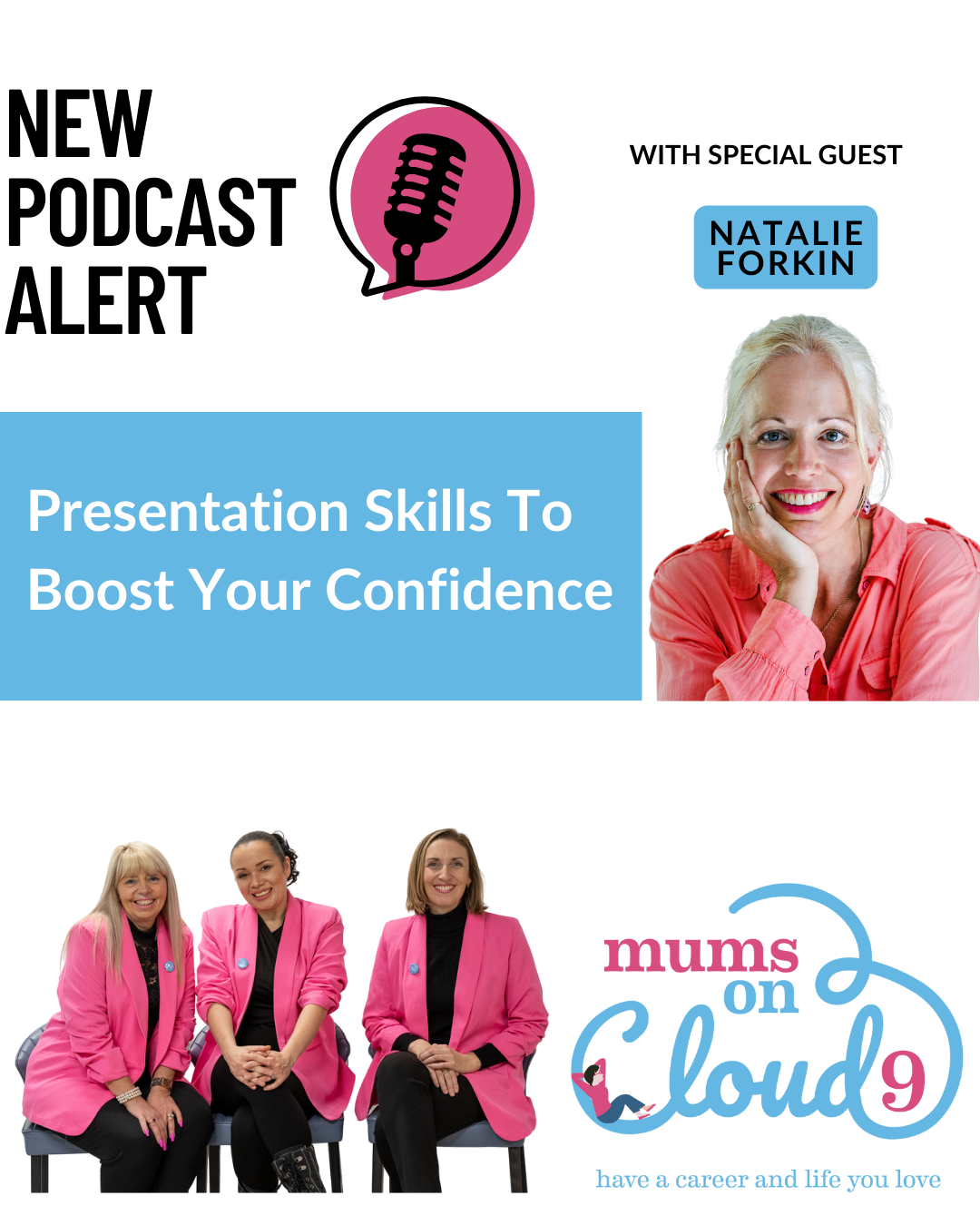
Presentation Skills To Boost Your Confidence
Presenting With Confidence: Practical Insights From Natalie Forkin
Stepping up to speak in front of others takes courage, especially when you return to work after maternity leave or a career break. In this episode, Natalie Forkin joins Heather Black and Lynn to demystify confidence in presenting. The conversation is real, relatable, and designed for women who want a voice at work, in meetings, or on stage.
Natalie starts by sharing her own story, admitting she once dreaded presenting and battled visible nerves. Her honesty sets the stage for a practical journey from discomfort to ease. Confidence, she reveals, is not innate; it is learned, rebuilt, and strengthened through small steps, practice, and self-compassion. Heather Black echoes this, describing her early years as a shy introvert and how confidence waned during time out from work.
The podcast digs into where anxiety begins. Natalie Forkin explains that speaking up is often perceived as a risk, especially in corporate settings, triggering our body’s fight-or-flight response. That awareness allows you to reshape your fears: Is the perceived risk truly life-threatening, or simply uncomfortable? Reframing the moment lets you step forward without expecting perfection.
Building confidence can start small. The hosts discuss practicing presentations in friendly environments—at church, with friends, or at home—before taking on a work audience. Even a dinner conversation with six people can be a first step. This gradual exposure allows new presenters to find their footing before stepping up in higher-stakes settings.
Preparation is at the heart of effective communication. Natalie Forkin urges listeners to focus on their audience and the outcome. What do your listeners need to know, feel, and do by the end? Thinking from their perspective streamlines your preparation—helping you ditch information overload and focus on the three most important points you want them to remember. Less is often more, both in content and delivery.
Nerves are normal, even for seasoned presenters, and mastering your state is key. Breathing techniques can help slow racing thoughts and calm your body, while giving yourself a mental pep talk reframes negative self-talk into supportive affirmation. The power of visualizing success—seeing yourself presenting well before the moment arrives—has neurological backing, and sports leaders use it to perform at their best.
Authenticity shines through. Whether you are a storyteller or prefer a more factual style, Natalie Forkin emphasizes working with your strengths and keeping stories and anecdotes relevant. Practicing introductions and maintaining positive body language—smiling, making eye contact—can help you set the right tone and encourage engagement.
Designing your presentation also means respecting how people learn, using visual aids, printouts, or conversation where needed, but avoiding “death by PowerPoint.” Rather than endless slides, try images, interactive elements, and focused handouts.
If your confidence falters or you want to move from basic comfort to impact, working with a coach provides focused, practical support. Natalie Forkin describes safe spaces where you can rehearse, receive feedback, and build your skills step by step, just as you would train any new muscle or habit.
The episode closes with genuine warmth. Success in presenting is for everyone. It is about growing incrementally, practicing, reflecting, seeking help, and allowing yourself the time to shine in your own way. The takeaway: you do not have to be perfect, you just have to be prepared—and you belong in every room where your story matters.
Listen Now
Episode Highlights
- Discover why anxiety around presenting is completely normal and how our bodies respond to perceived “risk”
- Practical strategies to overcome nerves, from breathing techniques to power poses and positive self-talk
- The importance of preparation—focusing on your audience, having clear takeaways, and why “less is more” with slides
- How to start small, build confidence through practice, and gradually grow into bigger opportunities
- Engaging your audience with relevant stories, authentic delivery, and purposeful calls to action
- Tips for mixing up presentation methods to suit different learning styles and make your content “stick”
- The value of working with a coach and how safe practice spaces can help you flourish
- Why true confidence comes from being yourself and building your skills step by step
Share:


